

DEEPDIVE: When the Target Changes but the Playbook Stays the Same
We’ve Been Here Before
Something unsettling is happening. Maybe you’ve felt it too. A creeping sense that the world has turned its gaze onto a new target, but the script sounds oddly familiar. Trans and non-binary people are being framed as dangerous, to children, to women, to the fabric of society itself. Schools are accused of “indoctrinating” kids. Doctors are branded as abusers. Young people who come out are dismissed as victims of a trend.
None of this is new.
If it feels like déjà vu, that’s because it is. The language might be updated, the focus changed, but the emotional blueprint, the panic, the scapegoating, the claim of protecting innocence, is the same.
We’ve seen this play out before.
In the US when Black students enrolled in white schools, the headlines screamed about social decay. When gay people demanded the right to love, the backlash claimed they were a threat to children. Under apartheid, the mere act of defying racial classification was treated as subversion. Always, the message was the same: these people, Black, queer, trans, are too different, too disruptive, too dangerous.
And always, there was a call to “protect” society. Protect women. Protect children. Protect truth. But what those in power were really trying to protect was control.
This article isn’t just about trans rights. It’s about pattern recognition. About learning to spot the old fears dressed up in new language. It’s about memory, collective and personal, and the responsibility that comes with it.
Because when we understand the pattern, we’re better equipped to break it. And maybe, if we’re honest with ourselves, we’ll stop being surprised when it repeats.
"Separate but Equal" Never Meant Equal
The lie of “separate but equal” was never about fairness. It was about control. It dressed itself up as protection, as moderation, as common sense. But underneath it all, it was about keeping people in their place.
In mid-20th century America, white parents weren’t just frightened. They were being taught to be frightened. Taught that letting Black children into white schools would somehow unravel the moral fabric of their communities. That their own children would be confused, corrupted, or worse.
Pamphlets were printed. Town hall meetings filled with fear. Not because of anything Black children had done, but because their presence challenged the idea that whiteness was the norm. That power didn’t have to explain itself.
And what was used to justify all this? The same things we see today in attacks on trans inclusion: concern for children. Fear of change. The idea that tradition is sacred, and anything unfamiliar must be dangerous.
People who resisted integration weren’t shy about saying so. They claimed they were the real victims. That it was unfair to be told what to do by courts or politicians. That being asked to share space was the same as losing it. In Virginia, entire public school systems shut down rather than let Black children in. Think about that. Grown adults choosing to deny all education rather than extend it equally.
And when we look at the way trans people are treated in today’s debates, that same logic is there. Some people would rather dismantle inclusive education altogether than accept that not every child fits into the boxes they’re used to.
Back then, there were endless warnings about "moral collapse." That schools would fall apart, that families would suffer. The same things are being said now about gender. That letting children explore their identity will ruin them. That being inclusive is dangerous. That recognising someone’s pronouns is the beginning of the end.
What’s really being protected isn’t children. It’s a worldview that can’t handle being questioned.
Just as pseudoscience once claimed Black people were less intelligent or more prone to crime, we now see junk studies and fearmongering about so-called rapid-onset gender dysphoria. The same attempt to make prejudice sound clinical. The same effort to hide cruelty behind concern.
And just like in the 1950s, white womanhood is being used as a kind of shield. We’re told that allowing trans women into women’s spaces will lead to violence. That people will lie, sneak, deceive. But there is no evidence. Only stories. Stories that tap into old fears and ignore the reality of who is actually at risk.
When Emmett Till was lynched, it wasn’t because he posed a threat. It was because someone claimed he did, and that was enough. That’s the power of a fabricated danger. You don’t have to prove it. You only have to repeat it until people feel it.
That’s how the machinery of fear works. It doesn’t need facts. It needs volume. And it needs time.
When Martin Luther King Jr. was called divisive, when he was told to wait, to tone it down, to be more polite, it wasn’t because people misunderstood him. It was because they understood him perfectly. They knew what he was asking for would disrupt the comfort of the majority. And they weren’t ready to give that up.
Today, trans people are told the same things. That they’re pushing too hard, moving too fast, asking too much. That if they just waited a little longer, maybe things would change. But the waiting room of justice is full of people who were told to sit quietly until it was convenient for someone else to care.
If you strip away the language and just look at the tactics, it becomes obvious.
Use the children as a shield. Claim to be the real victim. Invoke science without evidence. Warn of a slippery slope. Say it’s not hate, just concern. Paint those demanding inclusion as extremists. These are not new ideas. They’re recycled arguments, passed down like heirlooms of injustice.
And they have always been wrong.
History is full of people who thought they were protecting the right things, only to look back and realise they stood in the way of freedom. The people defending segregation didn’t think they were the villains. Neither do the people fighting against trans inclusion today.
But intention is not the same as impact. And fear is not the same as harm.
What matters is whether we have the courage to see the pattern and choose not to repeat it.
Apartheid and the Politics of Control
Apartheid didn’t just separate people by race. It turned separation into a national project. It gave it a bureaucracy, a moral vocabulary, and a sense of inevitability. What might have seemed like crude discrimination in other countries was dressed up in South Africa as administrative necessity. The system claimed to be about order, not hatred. About different paths, not inequality.
That was always the disguise.
In speeches and official documents, white leaders insisted that the system was protective. That Black South Africans weren’t being excluded, but guided. That they were being kept from a civilisation they weren’t ready for. This wasn’t a fringe belief. It was repeated in classrooms, pulpits, and newspapers. It felt normal to those who benefited from it. That’s how injustice survives — by becoming routine.
The obsession with classification was central to apartheid. Every person had to be sorted into a racial category. This wasn’t just for census records. It controlled where you could live, who you could marry, what job you could take, which hospital you were allowed to enter. The system was so determined to define everyone that it invented tools like the pencil test. If a pencil placed in your hair stayed put, that was enough to label you Black. And if it didn’t, you might be reclassified. Families were torn apart. Lives rerouted based on a piece of graphite.
What mattered wasn’t accuracy. It was obedience. It was about making sure the state had the final say in who you were.
That logic hasn’t gone away. In many countries today, trans people still face legal systems that try to define them without ever meeting them. In the UK, the Gender Recognition Act requires a medicalised, bureaucratic process. In the US, politicians are trying to rewrite the legal definition of sex itself, turning chromosomes into handcuffs. The message is clear: your identity only counts if the state agrees.
This isn’t just about documents. It’s about power. About who gets to name you, and what happens if you disagree.
Apartheid also reached deep into people’s private lives. Laws were passed to criminalise interracial relationships and sex. Couples were imprisoned. Homes were raided. Whole communities lived in fear of being caught loving someone deemed wrong. These weren’t isolated abuses. They were part of the state’s design.
It’s impossible not to see the parallel with how some governments now treat gender-affirming care, especially for young people. They call it abuse. They ban it. They punish doctors for offering it and parents for supporting it. All in the name of protection. But what’s really being protected is a fixed idea of how people should live, love, and look.
Just as apartheid framed Black South Africans as a threat to white purity, trans people are now framed as a threat to womanhood, to childhood, to society’s moral foundation. Not because of anything they’ve done, but because of who they are. Because they exist in ways that challenge old hierarchies.
One of apartheid’s most effective tools was fear. White South Africans were told they were under attack. That any move toward equality was a step toward chaos. That if they gave an inch, they’d lose everything. Fear kept them loyal to a system that harmed others and ultimately diminished them too.
That same fear is being deployed today. We’re told that letting trans people into public life, into politics, into sport or schools, is dangerous. That it will erase something vital. That it’s not possible to include everyone. But this isn’t about balance. It’s about control dressed up as caution.
Desmond Tutu once said that when the missionaries came to Africa, they had the Bible and the people had the land. The missionaries told them to pray. And when they opened their eyes, the land was gone. That’s the quiet danger of systems like apartheid. They don’t always come with bullets and boots. Sometimes they come cloaked in promises and paperwork.
Steve Biko, another leader in the anti-apartheid struggle, warned that the most powerful weapon of the oppressor is the mind of the oppressed. That’s the goal of transphobia too. Not just to exclude, but to erode. To make people question themselves so deeply they begin to disappear.
We need to be honest. Apartheid was a unique horror. But the mechanics of control it used: categorisation, moral panic, the policing of identity, did not die with it. They’ve been adapted. Reused. Repackaged for a new generation.
And unless we recognise that, they’ll keep showing up with different names and the same effect.
Save the Children, Silence the Queers
There’s a certain kind of moral panic that knows exactly where to aim. Not at adults. Not at institutions. But at children. Say the word "children" in a certain tone and you can justify almost anything. You can ban books. Fire teachers. Shut down support groups. Criminalise care. And people will applaud you for doing it.
That’s what happened in the late 1970s in the United States. Gay rights were slowly, painfully gaining ground, and backlash came dressed as virtue. The new strategy wasn’t to call gay people sinners or criminals, though that never really went away. Instead, they were labelled as dangerous to children.
Anita Bryant was the smiling face of this panic. A beauty queen, a singer, a Christian conservative. She led the "Save Our Children" campaign in Florida in 1977, which set out to repeal anti-discrimination protections for gay people. It worked. She won, not with slurs, but with sentimentality. "Homosexuals can’t reproduce, so they must recruit." That line stuck. It sounded like concern. It landed like an accusation.
And just like that, gay teachers became predators in the public imagination. Any mention of gay lives in schools was painted as grooming. Any visibility at all became evidence of an agenda.
This strategy didn’t stop at Florida. In 1978, Proposition 6, the Briggs Initiative, appeared on California ballots. If passed, it would have banned gay and lesbian people from teaching in public schools. The ads were chilling. Shadowy figures near playgrounds. Grainy images of children. Headlines that asked, “Do you know who’s teaching your child?”
The initiative was defeated, just barely. It could have gone the other way. And even though it lost, the damage was done. The association had been planted. Queerness equals danger. Visibility equals risk.
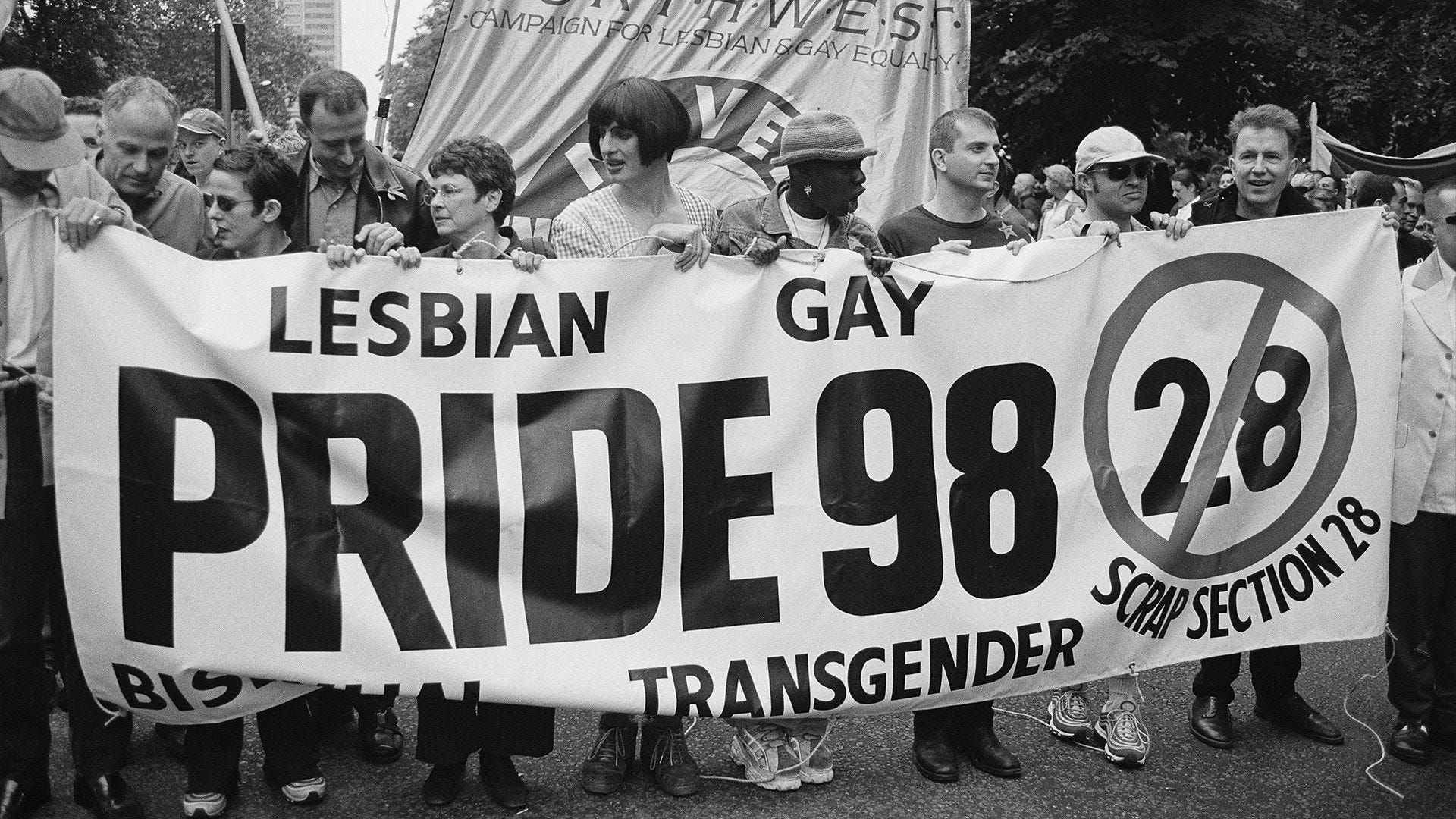
In the UK, the same panic took a more formal shape in 1988 with the passing of Section 28. It didn’t need propaganda posters. It didn’t need televised debates. Just one line of legislation: schools and local authorities were forbidden from “promoting homosexuality.” No one really knew what that meant, so they played it safe. Books disappeared. Teachers fell silent. Queer students learned to hide.
It wasn’t just policy. It was atmosphere. A fog of shame and silence that hung in classrooms for years.
One teacher recalled watching a student being bullied daily, unable to intervene, terrified of losing their job for doing the right thing. That is the legacy of vague cruelty. You don’t need to enforce it if people learn to self-censor.
The fear wasn’t just social, it was medical too. Until 1973, the American Psychiatric Association still classified homosexuality as a mental illness. In Britain, aversion therapy was used to try and “cure” gay men. Chemical castration, electroshock, forced hospitalisation. Alan Turing’s name comes up often, but he was not the only one. The system treated queerness like a virus. Something to be cut out, sterilised, eradicated.
And then came AIDS.
The arrival of HIV in the 1980s brought with it a whole new layer of stigma. The press called it the “gay plague.” Politicians said nothing. Churches said it was divine punishment. Entire communities were dying while the government looked the other way.
It wasn’t just the disease that killed people. It was the silence. The shame. The refusal to act.
Out of that silence came a different kind of resistance. ACT UP. Queer Nation. Marches, sit-ins, funerals that doubled as protests. The slogan was blunt: Silence = Death. Because by then, everyone understood that moral panic doesn’t just ruin reputations. It gets people killed.
As the years went on and public opinion shifted, the language of open hatred softened. But the underlying fear didn’t go away. It just found a new shape.
During the fight for marriage equality, opponents didn’t say they hated gay people. They said they were worried about what children would be taught in schools. They said marriage was sacred. That change would confuse kids. That families would be harmed. The arguments were dressed up, but they were the same at their core.
Today, we are watching that old playbook being dusted off and aimed at trans people.
The words have changed. The tactics haven’t.
“Groomer” is the new “recruiter.”
Trans kids are framed as confused, manipulated, or abused.
Schools that support trans students are accused of spreading an ideology.
Gender-affirming healthcare is labelled mutilation.
And the public is told, again, to be afraid.
This isn’t speculation. In the US, dozens of states have introduced laws banning discussion of gender identity in schools, punishing teachers who affirm students, or requiring that children be outed to parents. In the UK, schools are being pressured to limit support for trans students. Section 28 wasn’t repealed until 2003, but its logic is alive and well.
The cruelty is never accidental. It is calculated. It is dressed up in the language of care. And it always pretends not to be what it is.
When people say they’re worried about children, it’s worth asking whose children they mean. Because it is not trans kids being protected. It is not queer families being supported. It is not safety that is being prioritised. It is conformity.
History has already judged Anita Bryant. It has judged Section 28. It has judged the silence around AIDS. We look back and say, how did people let this happen? But we don’t always realise when we’re watching it happen again.
And we are. Right now.
The New Panic, Built by Design
This didn’t come out of nowhere.
The backlash against trans people wasn’t spontaneous. It wasn’t a natural response to rapid change or public confusion. It was built. It was planned. It was shaped by people and groups who have used the same strategy many times before. Find a minority. Define them as a threat. Frame it as concern. Repeat.
A decade ago, most people didn’t think about trans issues much at all. Trans people were mostly invisible in public life. When they did appear in media, it was through caricature, pity, or horror. They were seen as strange, rare, tragic. Not fully real.
But then things started to change. Visibility grew. Legal rights were debated. Trans voices became harder to ignore. And for some, that shift wasn’t just uncomfortable. It was useful.
A new scapegoat was needed. One that could stand in for a larger anxiety. Someone to blame when society feels unstable, when politics is failing, when people feel powerless. That is the role trans people are being pushed into now.
The myth of "gender ideology" is central to this. It sounds academic, like a theory you could disagree with in a classroom. But it isn’t meant to be discussed. It’s meant to be feared. The phrase was first used by far-right Catholic groups in Latin America and Eastern Europe. It helped rally opposition to feminism, queer rights, and abortion. The idea spread quickly. Now it’s everywhere.
In the UK, groups like the LGB Alliance and Fair Play for Women use it to claim that trans rights erase women. In the US, it’s used by think tanks and religious lobbyists to paint inclusion as a global conspiracy. The same phrases show up in policy briefings, tabloid headlines, and social media threads. The message is simple. Trans people aren’t individuals. They are a movement. An ideology. A threat.
Once you accept that framing, anything becomes justifiable. Medical bans. Speech restrictions. Surveillance in schools. Censorship. All of it can be explained away as protection.
It is not a coincidence that this is happening while other parts of public life are falling apart. Public services are underfunded. Inequality is growing. Politics feels stuck. In that kind of environment, it is easier to distract than to fix. Trans people are being used as a smokescreen.
In the United States, hundreds of anti-trans bills have been proposed or passed in the last few years. Some ban healthcare for young people. Some force schools to report students to their families. Others restrict bathroom access or sports participation. None of these laws solve real problems. They just punish a vulnerable group.
In the UK, the government blocked Scotland’s gender recognition reforms. The Equality and Human Rights Commission has issued guidance that allows broad exclusions of trans people from single-sex spaces. The media runs daily stories that turn trans existence into a topic for public argument. And yet, most people have never met a trans person or heard their story directly. The conversation is being shaped almost entirely by people on the outside.
The press has played a central role in this. In the UK, publications like The Times and The Telegraph have published story after story that paint trans rights as absurd or dangerous. In the US, Fox News has run entire segments warning of gender clinics, trans athletes, or “indoctrinated” children. These reports rarely include the voices of trans people. When they do, it’s often just to create the appearance of balance.
The more extreme the claim, the more attention it gets. And attention is the business model. Anger drives clicks. Fear holds viewers. Meanwhile, the truth that most trans people mostly want to live ordinary lives gets buried under headlines written to provoke.
There is also a growing wave of disinformation. One of the most harmful ideas is that being trans is contagious. That young people are being misled by friends, social media, or educators. This idea is based on a single study from 2018 that was methodologically flawed and later discredited. Yet it has been cited repeatedly by lawmakers and pundits.
This lie serves a purpose. It turns identity into a mental health crisis. It allows politicians to talk about “protecting children” while banning care, silencing teachers, and punishing families. It casts transness as a kind of infection. One that needs to be contained.
These are not abstract harms. They are real. Trans people are at increased risk of mental health challenges, homelessness, and violence. Not because of who they are, but because of how they are treated. In the UK, wait times for gender services are now so long that young people age out before they are ever seen. In the US, families are fleeing states that criminalise their care. In both countries, schools are becoming hostile environments for students who need support the most.
And yet, despite everything, trans people are still here. Still surviving. Still building mutual aid networks. Still writing, creating, organising. Still showing up at protests, speaking at hearings, mentoring each other. Still living.
This is the part that never gets enough attention. Not just the harm, but the resistance. Not just the grief, but the determination. The ways trans people hold each other up when the rest of the world looks away.
They are not waiting to be saved. They are refusing to disappear.
Know the Pattern, Break the Spell
There is a script that power follows whenever it feels threatened. It does not need to invent new tricks. It simply changes the costume, swaps one group for another, and runs the same story again.
We’ve seen it before. Black children entering white schools were called dangerous. Gay teachers were painted as predators. Mixed couples were criminalised for loving each other. Every time, the language was polished. Every time, the fear was framed as care. And every time, people in power insisted they were only trying to protect something sacred.
Now, it is trans people who are being cast in this role. Their lives are turned into metaphors. Their bodies made battlegrounds. Their identities debated like ideas instead of recognised as truths. The details shift. The machinery stays the same.
This moment is not just about policy. It is about memory. Because if we forget what came before, we risk falling for it all over again.
The same tropes are playing out in new voices. The same manufactured fears. The same appeals to tradition. The same warnings about children, about morality, about civilisation crumbling if we let people live freely.
We are told this is a debate. It is not. It is a tactic.
Once you see it, you cannot unsee it.
So the question becomes: what will you do?
Because history is not made by the loudest voices in the room. It is made by the choices people make when no one is watching. It is made in the quiet moments. The conversation you refuse to stay silent in. The policy you push back against. The young person you choose to affirm instead of correct.
If you believe in justice, this is the time to act. Not later. Now.
If you are cis, use your voice. Don’t wait until you feel like an expert. You don’t need perfect words to say that cruelty is wrong.
If you work in media, education, healthcare, or politics, ask who is being left out. Ask who is being misrepresented. Ask what damage is being done when debate replaces dignity.
If you are trans or non-binary, know this: you are not alone. You are not too much. You are not the problem. You are part of a lineage of people who have lived honestly in the face of pressure to shrink, to hide, or to disappear.
And to all of us, wherever we stand, this is a moment to decide who we want to be.
When we look back on this time, we will be asked what we saw. What we understood. What we did.
Let it not be said that we stood by while another moral panic swept through. Let it not be said that we forgot the lessons of the past. Let it not be said that we knew and chose silence anyway.
Let it be said that we recognised the pattern, broke the spell, and stood on the side of the people who had always deserved to be seen. Fully. Humanly. Without apology.